How much of what you think you know about signal boosters is actually true? Honestly, probably not that much. If you spend five minutes on YouTube asking about them, you drown in conflicting information. Someone swears they're magical. Someone else says they're illegal scams. Everyone's got an opinion, and most of them are wrong. Let me straighten out the biggest ones.
The Magic Box Myth
Here's what I hear all the time: "Boosters create their own signal." No, they don't. That's just not how this works. A signal booster is basically taking the weak signal already coming from the nearest tower and making it stronger. Think of it like a microphone and amplifier in a music system. The amplifier doesn't create sound, it takes a faint noise and makes it loud enough to hear. That's exactly what a booster does with cell signals.
This actually matters because it means if you're in a total dead zone where there's literally zero signal outside, a booster won't help. You need something to amplify. But in most urban areas - Gandhinagar, Rajkot, Vadodara, there's always some signal, even if it's faint. That's what gets amplified.
The Illegal Thing
People worry that boosters are against the law. This fear came from somewhere real about 10+ years ago. But modern, certified boosters are completely legal in India as long as they're TRAI-compliant. That's it. TRAI = the Indian telecom regulatory authority. So if you're looking at a booster that says it's TRAI-certified, it's legal. Easy as that.
Where people get in trouble is buying uncertified garbage from sketchy sellers. That's where the real problems come from. But a proper, certified booster from a real seller? Totally fine. It's like the difference between buying an imported phone through an official channel versus from some guy selling blackmarket phones out of his trunk.
Will It Fry My Phone or Kill Me?
This myth comes up a lot and honestly, I get it. People don't understand radio signals. But here's the deal: the signals from boosters (and from your phone) are non-ionizing. That means they don't have the power to damage DNA or give you cancer like X-rays would. The FCC, WHO, and India's own TRAI have all studied this. No credible research shows boosters cause health problems.
Actually, here's the funny part, when your signal is stronger, your phone doesn't have to work as hard to maintain a connection. So it might actually use less power, not more. Better signal can even help your battery last longer. So if anything, boosters help your phone.
Only for Rural Areas
People think boosters are just for farmers in the middle of nowhere. Wrong. Actually, the opposite is more true. Cities like Gandhinagar have tons of dead zones. Thick concrete buildings, multiple buildings close together, metal frames everywhere - it all blocks and interferes with signal. Someone in a 10-story office building surrounded by other buildings might have worse signal than someone standing in an open field.
Boosters solve that urban problem. That's actually their sweet spot. Apartment? Office building? Modern construction with concrete? That's where they shine. They're not rural-only at all.
Works Anywhere With Enough Power
Some people think if a booster is powerful enough, it can pull signal from miles away. Nope. Boosters need an existing signal to work with. You need at least something around -110 dBm or better. If there's literally zero signal where you are, no booster helps. It's not a limitation of the product, it's just physics. You can't amplify nothing.
Before you invest, actually test your outdoor signal with a real app. Not bars, actual numbers. If you're below -120 dBm, a booster might not help much. If you're -110 or better, you'll see a real difference inside.
Expensive and Complicated to Install
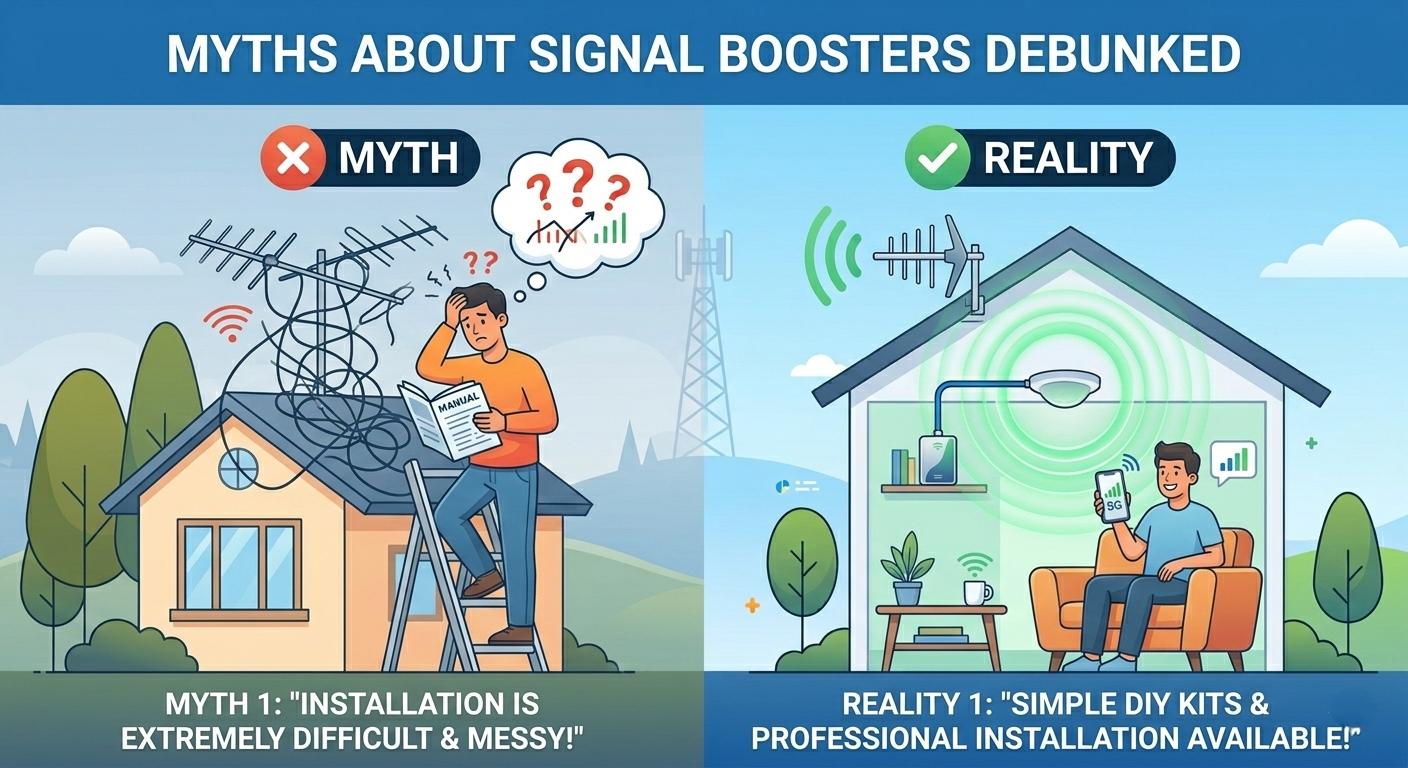
People think they need professional installation and will spend thousands. The reality is way different. Good home boosters start around ₹14,000 to ₹15,000. Lots of them are basically plug-and-play. Mount an antenna near a window, plug in the main box, done. You're looking at maybe 30 minutes if you've never done it before.
Professional installation makes sense for complex situations - big offices, rooftop work, if you're not comfortable with basic tech. But for most homes? Totally DIY-able. And if you do need professionals, it's usually just ₹14,000.
They Break Networks and Cause Interference
People worry that boosters mess up cell service for everyone. Modern certified boosters are specifically designed not to do this. They have automatic gain control and filters to prevent feedback and interference. The whole point is enhancing what's there without breaking anything.
The only way you get interference is with uncertified boosters or if someone installs it completely wrong. Buy certified, install it right, and you're fine. Carriers actually prefer properly working boosters in their service areas because it means happy customers.
Only for Calls, Not Data
Some people think boosters only help with voice calls but data stays slow. Wrong. Boosters amplify your entire cellular signal. All of it. Voice, 4G, 5G, texts, everything. If you get better signal, everything gets faster. Your calls are clearer AND YouTube videos load faster AND your email syncs instantly. It's all the same signal, just stronger.
Can't Compare Different Boosters
People think all boosters are basically the same. They're not even close. There are huge differences in actual power, which frequency bands they support, build quality, which carriers they work with, how long they last, and what kind of support you get. A ₹5,000 booster from an unknown seller and a ₹15,000 certified booster are not the same thing. The cheap one might barely work. The better one will definitely work and probably last years.
This is why I always say don't cheap out. Spend a bit more. The difference between ₹10,000 and ₹15,000 is often the difference between something that works and something that frustrates you constantly.
The Bottom Line
Signal boosters work. They're safely amplifying existing signals, they're legal when certified, and they solve real problems for millions of people. The myths come from misunderstanding, old information, or getting bad equipment from bad sellers. Know your real signal strength, buy certified equipment from real sellers, and you'll be fine.
Still have questions? Contact us and we'll walk you through whether a booster makes sense for your specific situation. No pressure, just real answers.
Myth 3: "Signal Boosters Fry Your Phone or Give You Cancer"
The myth: Using a signal booster will destroy your phone's battery and circuitry, or worse, expose you to dangerous radiation.
The reality: This is the kind of myth that persists because people don't understand non-ionizing radiation. Here's the truth: properly installed signal boosters operate at safe power levels that comply with established safety standards. The cellular signals themselves (whether from your phone or a booster) are non-ionizing, meaning they don't have the energy to damage DNA or cause cancer like, say, X-rays would.
What's actually interesting: When a signal is stronger, your phone doesn't have to work as hard to maintain a connection. This might actually reduce the power your phone needs to transmit, potentially saving battery rather than draining it. Organizations like the FCC, WHO, and India's TRAI have all studied this. No credible research shows signal boosters cause health problems.
Why this matters: You can use a booster worry-free. It's not going to harm your phone or your health. That said, don't point powerful antennas directly at yourself for hours (common sense applies to everything).
Myth 4: "Signal Boosters Are Only for Remote Villages and Dead Zones"
The myth: Boosters are only useful in rural areas without cell tower coverage.
The reality: Ironically, the opposite is often true. Urban areas like Gandhinagar, with dense buildings, concrete construction, and high network congestion, often have MORE dead zones than rural areas. A farmer in the middle of a field might get better signal than someone in a 10-story office building surrounded by other buildings.
Why urban areas need boosters: Concrete walls, metal frames, basements, inner rooms, these all block and weaken signals. Multiple buildings in close proximity cause interference. Network congestion from so many users can degrade signal quality. These are urban problems that boosters solve.
Why this matters: If you live or work in a city, don't assume you don't need a booster. The dead zones in your apartment or office are exactly what they're designed for.
Myth 5: "A Booster Works Wherever, Even in Areas With Zero Signal"
The myth: Boosters are so powerful they can pull signal from miles away.
The reality: No booster, no matter how expensive, can create signal where none exists. Boosters need an existing signal (typically around -110 dBm or better, which is very weak) to amplify. If there's absolutely no signal outside, a booster can't help. It's not physics, it's just not possible.
Why this distinction matters: Before investing in a booster, check your outdoor signal strength. Download a signal strength app and test it outside your location. If you see literally one bar or less on multiple carriers, verify the actual dBm. If it's below -120, a booster won't help. If it's -110 or better, boosters will significantly improve things inside.
Myth 6: "Signal Boosters Are Expensive and Need Professional Installation"
The myth: You'll pay thousands and need to hire technicians.
The reality: Prices range widely. Quality home boosters start around ₹10,000-₹15,000. Many include simple DIY installation - open box, position antenna near a window, plug in, done.
When you might need professionals: Multi-story buildings over 5,000 sq ft, rooftop antenna installation, or if you're not tech-comfortable. Otherwise? You can probably handle it yourself in about 30 minutes.
Why this matters: Don't assume huge cost or hassle. For most people, it's affordable and straightforward. If you do need professional help, it usually costs ₹2,000-₹5,000.
Myth 7: "Boosters Create Interference and Break Networks"
The myth: Turning on a booster disrupts cell service for everyone or breaks the carrier's network.
The reality: Modern certified boosters are designed to NOT do this. They include automatic gain control (prevents over-amplification) and filters that prevent feedback and interference. The whole point is amplifying what's there, not disrupting it.
The caveat: An improperly installed booster from an uncertified manufacturer could theoretically cause issues. But certified, properly installed boosters? They're designed specifically to coexist safely with networks.
Why this matters: Carriers actually like properly installed boosters in their service areas because happy customers = fewer support complaints. They only have issues with illegal, uncertified devices. Stick to certified equipment, and you're fine.
Myth 8: "Boosters Only Help With Voice Calls"
The myth: Voice gets better, but your 4G data stays slow.
The reality: Boosters amplify the entire cellular signal - voice, 4G, soon 5G, SMS, everything. If you're getting better signal, everything gets better. Calls are clearer AND your YouTube videos load faster AND your email syncs instantly. It's all the same signal, amplified.
Why this matters: If you struggle with data speeds, a booster will legitimately help. This isn't for voice calls only.
Myth 9: "All Boosters Are the Same"
The myth: One booster is basically the same as another.
The reality: Not even close. There are huge differences in:
- Actual power and gain (dB rating)
- Frequency band coverage (which carriers it works with)
- Build quality and durability
- Certification and regulatory compliance
- Customer support quality
- Installation complexity
A ₹5,000 booster from a no-name Amazon seller and a ₹15,000 certified booster from a reputable brand are NOT the same thing. The cheap one might barely work. The better one will definitely work and last years.
Why this matters: Don't cheap out. The difference between ₹10,000 and ₹15,000 is often the difference between a working solution and a frustrated refund.
The Myths We Haven't Mentioned
You might hear other claims too: that boosters need to be calibrated by professionals every month, that they only work on specific phone models, that they're banned in certain states. These are all false. Don't believe everything on the internet.
The Bottom Line
Signal boosters work. They're not magical, they're not dangerous, they're not illegal (if certified), and they're not complicated. What they are is a proven, practical solution to a real problem millions of people face. If you have weak signal at home or in your office, stop worrying about myths and start thinking about solutions.
Still have questions or concerns? That's exactly why we're here. Contact us for a free, no-pressure consultation. We'll be honest about whether a booster will actually help your specific situation, and if it will, we'll help you get the right one installed properly.